Posts


Ever wondered what it takes to mine one Bitcoin block per day?

In this video, we dive deep into the electricity and computational power required to achieve this feat. From hash rates to energy costs, we break down the essentials of Bitcoin mining and explore the broader Bitcoin ecosystem. Learn about the technology, economics, and strategies behind mining, plus insights into how public mining companies and treasury firms are navigating the crypto space. Whether you’re a crypto enthusiast, investor, or curious about Bitcoin’s future, this video is your guide to understanding the backbone of the blockchain!

Hashpower Academy Donations (Thank You!):
L1 Bitcoin: bc1qlgkc4pyrz22cykrx49cmuku3zyy2nuequu6r9y
L2 Lightning: academy@walletofsatoshi.com

Free Bitcoin Course! (Big Picture Basics):
https://www.hashpower.academy

I got my Bitcoin Mini-Miner from IXTech (10% off with code JAKE):
https://ixtech.xyz/?ref=JAKE

Align a meeting if you are looking to explore Mining/Hosting and other Business/Consultation Inquiries:
https://calendly.com/terahash/30min

Financial Disclaimer:
This video serves educational and informational purposes only and should not be construed as financial advice or investment recommendation. The views expressed are those of the presenter and do not represent Hashpower Academy’s official stance. Information is provided ‘as is’ without warranties, express or implied, as to its accuracy or completeness. Engaging with Bitcoin involves high risk, including potential financial loss, market volatility, and energy costs, and is suitable only for those who can bear these risks. Always conduct your own research and consult with a qualified financial or technical advisor before making decisions related to Bitcoin.

Video Transcript:

Hello there and welcome to the Hash Power Academy, your place to learn anything to do with Bitcoin. The topic of today’s video is understanding what it costs in electricity and hash rate and how much you earn in Bitcoin by mining one block per day. Wouldn’t that be interesting? So, first and foremost, let’s understand that there is 144 blocks distributed to the entire network per day. Now to be one of those you need to represent 144th and the cost in that is quite lengthy. The first thing to understand is why is there 144 blocks a day? Well, the network and the blockchain in of itself is also referred to as the time chain because the Bitcoin software is trying to regulate the amount of time and keep it constrained to about 10 minutes. Why? Because the amount of hash rate of all the different miners coming online, producing and finding blocks, adding it to the chain, well, it’s not exactly 10 minutes. And so that difference, that change that if blocks get faster and less than 10 minutes or slower, more than 10 minutes, that the network looks back 2016 blocks, two weeks roughly, to approximate how long did that two week period get shortened to or lengthened to. And if it gets shorter, difficulty increases. So the regulation of 144 blocks per day is what the software is trying to do no matter how big the network gets. And so to understand how much you’re getting by producing one block a day, let’s understand all the different pieces. So 144 blocks approximates to about 450 Bitcoin of subsidy. Now this is the key easy one. 3.125 subsidy per block. That’s the easy one, right? Next one down. So 144 and you represent one of those blocks. The network hash rate I’ve used a,000 xahash because by the time you could get enough hash rate to mine a whole block, the network’s probably going to be bigger because it’s always growing and the difficulty is always increasing. And the easy numbers here is that you can divide a,00 x a hash by 144 because we’re just representing one and it’s 6.94 or something like that. Let’s round it seven. So you need seven xahash of hash rate online racked and hashing to produce one block per day with a th00and xahash network which is 144. Now 7 x aash represents 7 million terraash. That’s a lot of hash rate. It’s a lot of heat as well. And there is a conversion with those computers. So to understand how much energy we would need as well. Well, we can divide sorry we can multiply the amount of hash rate by the efficiency. Now megaww per xahash is the same as jewels per terahash. It’s just bringing the numbers down by a factor on both sides. So, it’s a multiplier here and that gives us I’ve prepared the numbers quite easily. 7 * 14.28 is 100 megaww. And here’s where it gets interesting. If a very large hydropower station produces about 100 megawatts of power and one block can be mined with 100 megawws of power. It means that the network right now at scale is about 144 hydro power stations in terms of power source. That’s a good little way of sort of comprehending the scale of this system. 144 100 megawatt power stations and that’s using this efficiency. The average efficiency of the network is still closer to 20. So it’s a lot more power in a sense. And so we’re transitionally going to see more efficient compute come up come online over time. That’s what kicks off the old machines of the network or distributes them more more locally to more rural communities as such. But yeah, this is a an interesting way to sort of work your way through the commodity chain of electricity, hash rate, and bitcoin with your one single block example. If you want to scale to the size of a 100 megawatt site producing 7 million terraash to mine your one block and earn 3.125 Bitcoin per day in this 4-year period. Well, these are the numbers that you need. Thank you for listening. I hope you enjoyed and I’ll see you in the next video. Goodbye.

Watch on Youtube!


Can Bitcoin stay decentralized as it grows? I dive into its network components, comparing IOUs like MicroStrategy, exchange balances, and ETFs to self-custody with private keys—your key to true ownership.

Solo mining vs. pooled mining? Pools dominate for economic reasons, but decentralization hinges on no pool projecting more than 50% hashrate (like Ghash.io’s 2014 scare). From nodes to miners, I unpack how collective efforts keep Bitcoin free.

Watch now—secure Bitcoin’s decentralized destiny!

Hashpower Academy Donations (Thank You!):
L1 Bitcoin: bc1qlgkc4pyrz22cykrx49cmuku3zyy2nuequu6r9y
L2 Lightning: academy@walletofsatoshi.com

Free Bitcoin Course! (Big Picture Basics):
https://www.hashpower.academy

Align a meeting if you are looking to explore Mining/Hosting and other Business/Consultation Inquiries:
https://calendly.com/terahash/30min

Affiliate Links for everything you need:
⛏️ Mini-Miners: https://ixtech.xyz/?ref=JAKE
⛏️ Mini-Miners https://www.solosatoshi.com/aff/1405/
⛏️ Mini Miners: https://www.cryptocloaks.com/aff/Academy/
Wallets & Products: https://store.blockstream.com/?code=academy

Financial Disclaimer:
This video serves educational and informational purposes only and should not be construed as financial advice or investment recommendation. The views expressed are those of the presenter and do not represent Hashpower Academy’s official stance. Information is provided ‘as is’ without warranties, express or implied, as to its accuracy or completeness. Engaging with Bitcoin involves high risk, including potential financial loss, market volatility, and energy costs, and is suitable only for those who can bear these risks. Always conduct your own research and consult with a qualified financial or technical advisor before making decisions related to Bitcoin.

Video Transcript:

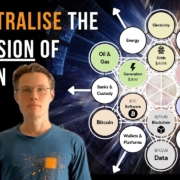
Hello there and welcome to the Hash Power Academy, your place to learn anything to do with Bitcoin. The topic of today’s video is looking at decentralization in all its particular components, but we’re also going to compare it to centralization and why people choose different things. It’s conveniences, efficiencies, comforts, trust. There’s all several different pieces to it. But what we’re going to do with this video is look at the word decentralization in all its different areas of the Bitcoin network. And what is decentralization and its importance to Bitcoin? It’s fundamental to the success of Bitcoin for this particular reason. If you and I are going to store our time and energy, our work in a form of money at a planetary scale like Bitcoin, we need to make sure that it serves everyone. And what I mean that is it needs to fragment all of the power aspects of the system. The power structures whether it’s electricity hash rate or bitcoin in of itself. All those different pieces need to fragment down to the individual as much as possible. And this is important, but we will never reach that pure 100% perfection of absolute decentralization to every single last individual on this planet because not every single person is going to involve themselves in all these different pieces. And so with this video, we’re just going to explore different areas as to why centralization has occurred as well. And decentralization is going to change over time because for example inevitably a lot of miners use pools and there is a whole group of pools that you can put in a pie chart and China and the US are always more than 50% of that with some few other smaller pools. So, even though I’ve shown you a whole list of different centralized versions, all these big C’s in red and then decentralized counterparts. We’re seeing these inevitabilities that people are going to use a mining pool for example, but at making sure that even these centralized entities that represent large groups of Bitcoin miners that even they themselves try and decentralize by not having too much of the hash rate. And so these are different important pieces that they’re going to develop over time, but they do represent the fundamental technologies and commodities of the economic energy ecosystem we call Bitcoin. So let’s dive in top to bottom. Bitcoin I use. Are you the one holding your private key? And your private key allows you the secret access to a particular wallet that everyone has a copy of. if you are running your own node versus just having a wallet. So your private key represents your prosperity, your ability to spend without permission. You do not have to ask permission from every anyone. If you hand your Bitcoin to Michael Sailor or any of the treasury stocks to create some more reward potentially, you’re also trading for risk. You’re trusting your Bitcoin in someone else’s hands. And trust in the financial system is very much what it depends on at the moment. And everyone that’s grown up today have come have been born into a system of debt based money where we’ve all trusted our time and energy in the hands of people that gave us more units interest. But by the time you spend the money, it buys you less. So there is theft in that system, a theft of our time and energy. And so that ability to also access the money is also important because when there’s a problem with the trust model of our current financial system and everyone rushes in to try and access their money, oh there’s no more cash anymore and there’s no lining up at the ATM. And so self custody is the prosperity side of things where you need to have an economic access to any of your time and energy that you’ve preserved in this system. So, at least having a decent percentage on if if not the majority of your Bitcoin in your own hands is important. Again, I’m not trying to make people do anything. It’s about optionality. you can go and take more risk, but this one’s a lot more rewarding, especially looking back to the historical nature of all the different things that have gone wrong within the Bitcoin space and different entities such as FTX and all the other different types of exchange hacks and problems. And you know, the the thing that stood the test of time is people that had their own Bitcoin in their own wallet with their own private keys. That’s just the hard facts. Now, when it comes to the particular wallet that you may use versus running a full node, there is a lot of people that they aren’t transacting themselves that if they send Bitcoin through a wallet that that those requests to send their own money are not going through their own node, it’s going through someone else’s node. And so, wallets represent these centralized custodians of a lot of Bitcoin as well. The alternative is to use your own node that when you transact and broadcast your transaction to the network that’s going through your own node. And the other side of the Bitcoin node uh discussion is data that if you have a full node, you have absolutely every different component of transactional truth, every single block going down to the first one stored in your own hands. And so you can verify all the different transactions and different Bitcoin and different wallets. And this is important for any form of receiving payments as well. And so if you’re just using some wallet, you are entrusting the information that others provide you instead of verifying it yourself. That’s not good. Again, recommending run a full node and self custody. We’re just going to highlight these in green as we go. Next one down. We’ve done own, we’ve done read, let’s do right. So, lottery and luck. Why do mining pools exist? Mining pools exist for the convenience of more frequent payouts. And this is particular in the example of there only being 144 blocks per day. This is why other people call it the time chain as well because the blockchain time chain it’s regulating the pace of blocks to 10 minutes which means there’s about 144 per day and when there’s only 144 per day let’s say there’s 144 miners with one computer represents the network roughly over time multiple days you’re going to get about one block per day but if the network hash rate were to grow in size 10x you as an individual miner, you would be getting a block not every day, now every 10 days. Now, what if it’s 100x? You’re not getting a block every 1 day or 10 days, it’s getting every 100 days. And so, if you’re using a mini miner, you’re just about never going to get a block. This is why it’s called lottery mining. Now, it’s a trade-off type of thing where mining pools allow a centralized convenience, which is they’re collecting the hash rate from lots of miners from all different places altogether to concentrate that frequency of how quickly they find a block. The more blocks paid and distributed out to said Bitcoin miners means it improves the frequency of payouts. This is important because miners are also contending with an electrical bill which say comes every month. So they need to make sure that they’ve earned enough Bitcoin per month to manage the cash flows of continually having to pay a dollarized electrical bill against Bitcoin block rewards that they may earn or distributed through a mining pool. So mining pools are this maturity of the the commercialization of issuance power in the Bitcoin network. and even in of themselves that they have these very large pools um such as Foundry and Antpool that they they hold significant amounts of the hash rate of the entire network. So even though we have these centralized entities called mining pools that centralize the hash rate to provide quicker payouts which are very helpful to miners, we want to make sure that no pool in of themselves gets too big. And so any pool getting closer and closer to that 50% of the network mark, not good. And so it’s important that miners know that they switch their hash rate if a pool’s getting too centralized. But there’s also other things such as uh OFAC compliance and all these sorts of things that come into this side of things. But let’s get down to the hardware layer. So these three components represent the digital layers of the Bitcoin network and these three represent the physical. And the great thing about the physical side of the Bitcoin network is it’s more decentralized in a sense that it’s got physical constraints. Everything on the digital side has a lot more ease to be grouped and centralized together for all the different efficiencies of trade and and frequency of payouts. the data side of things. There’s another example for centralization of the blockchain which goes into the layer twos. There is a lot of people that don’t run their own servers locally. They use things like Amazon web server. There’s a large percentage of lightning nodes that are all using AWS centralized all from one provider that could just switch the whole lot off but that would be chaos. But let’s dive onto the physical side. So if you are mining with your own hardware at home, that’s great, but not everyone can do it because of electrical constraints. And so there’s things such as hosted mining, which you could say is centralized in the sense of uh a single Bitcoin mining site can have thousands of machines, but each different machine may be uh owned by different people, but it’s it’s still centralization at a local level. You can’t run half the network in one particular location. So again, the physical side of Bitcoin’s network is a lot easier to decentralize and self mining is that path to you unlocking the energy side of the Bitcoin network which delves us into the future. So what you need to selfmine is an access to power. uh you’re either buying your power from some form of national grid or you’re producing your own power or in combination with a small local community on a micro grid. And what this represents is a way of essentially accessing power in a less risky way. Because here’s the thing, when the lights go out, where there’s a power cut on national grid scale, it’s a system represents millions of people in some countries. And when it goes down, it’s chaos. You you completely realize how dependent you are that the fridge doesn’t work and I can’t charge my phone. It’s about to die and where’s the candles and all these sorts of question. There you go. You’re going back to a more basic energy source like candles and fire and do you have a lighter which these are the little things that if you go wandering off into the forest, a lighter is the difference between life and death. if you don’t want to sit there and make friction friction related fire for 30 minutes. So the national grid level is to the micro grid level and again people are not going the majority of bitcoiners are not going to make the effort to go to this depth of layers but there’s also going to be bitcoiners that will passionately want to build micro grid communities and stuff like that. Again drop me an email if you’re interested in such stuff in [email protected]. academy. And this truly comes to the final discussion of this video. Government dependency versus self-sufficiency. The collective versus the individual. Now, self-sufficiency is essentially the representation of all these components. Do you have an aspect of an ability to produce power? If you do, you are completely separate from the rest of society that depends on the tap working and the lights staying on. If you have access to produce your own power, there’s just slightly less headache and stress of worrying about the chaotic world that we’re currently in. If you produce your own power, you vertically integrate yourself into having electricity for yourself and others. and the wasted electricity you can mine yourself to produce your own blocks or yes use a mining pool or use a mining pool that’s trying to decentralize its structure and design such as ocean and run a full node it’s a large SSD that can store all the transaction information and when you spend bitcoin or receive it you’re verifying and broadcasting yourself and obviously keeping your bitcoin in your own wallet with your own private key and not trusting others with it. But again, everything about this entire system is about optionality. We’re not trying to force anyone to do anything. But if some wish to live as far away from society, but still connected through these different components, that’s great. And if you want to be as concentrated and centralized in the way that you live in a city, that’s your choice. That’s the whole point of this is self-sufficiency with planet planetary scale money that we can all preserve our time and energy into the future. Thank you for listening. I hope you enjoyed this video. Like, share, subscribe. Please send this to a couple of friends that you think would enjoy this video. Even if you are a Bitcoiner that has learned as much as you can, stuff like this just helps sort of refresh the mind and all the different pieces and moving parts of this everchanging system. I’ll see you in the next video. Goodbye.

Watch on Youtube!



Your life runs on two systems—electricity grid and internet. Without them humming, everything stops!

I reveal their secret: the grid balances via energy economics, while the internet moves info. But the financial system? It’s broken.

Enter Bitcoin: an economic system secured by energy, not trust. I unpack how Bitcoin leverages grid power to fix finance, ensuring security through hashrate and miners’ muscle.

Watch now—discover why Bitcoin’s energy-information combo is the future of money!

Primary Contact
info@hashpower.academy

Hashpower Academy Donations (Thank You!):
L1 Bitcoin: bc1qlgkc4pyrz22cykrx49cmuku3zyy2nuequu6r9y
L2 Lightning: academy@walletofsatoshi.com

Free Bitcoin Course! (Big Picture Basics):
https://www.hashpower.academy

I got my Bitcoin Mini-Miner from IXTech (10% off with code JAKE):
https://ixtech.xyz/?ref=JAKE

Align a meeting if you are looking to discuss Mining/Hosting and other Business Inquiries:
https://calendly.com/terahash/30min

Financial Disclaimer:
This video serves educational and informational purposes only and should not be construed as financial advice or investment recommendation. The views expressed are those of the presenter and do not represent Hashpower Academy’s official stance. Information is provided ‘as is’ without warranties, express or implied, as to its accuracy or completeness. Engaging with Bitcoin involves high risk, including potential financial loss, market volatility, and energy costs, and is suitable only for those who can bear these risks. Always conduct your own research and consult with a qualified financial or technical advisor before making decisions related to Bitcoin.

#Bitcoin
#crypto
#catvideos
#Internet
#BitcoinEconomics
#FinancialSystem
#CryptoMining
#EnergySecurity
#Blockchain
#BTC
#GridBalancing
#CryptoFuture
#BitcoinEnergy
#EconomicSystem
#Hashrate
#CryptoFinance
#EnergyMoney
#Bitcoin101
#FinanceFuture
#SystemSecurity

Video Transcript:

Everything about your life and how you live it requires your complete dependency on these two systems, the electricity grid and the internet. Everything about your life boils down to energy and information. The costs of everything and the output rewards of all your time and energy being spent, money. And the internet comes into this because we have seen over the last few decades the complete de dematerialization of the high street. I remember growing up as a kid there being endless amounts of shops and Toys R Us and everything else and year after year after year the entire high street has transcended to the internet. But that deterioration on the physical side of things is quite a problem. Now where am I going with this video? Well, here’s the thing. We as humans now live in this boundary layer between these two worlds that we operate in. The majority of kids with their heads completely buried in the internet and the physical world always being there, always adhering to the laws of physics. And there’s this thing called money. Everything that we consume our time and energy working to gain to then spend to enjoy our time and energy on this earth. And that circular economy is fundamental. And where Bitcoin gets rid of the inefficiencies of the current monetary system is that the more we ensure the fundamentals of how we live are sustained and prosperous such as a functional electricity grid, just think of uh Spain at the moment. They had a massive power cut and people died. And that’s what happens when civilizational infrastructure stops working. It’s a serious problem. And it’s the same with our financial system. Whenever there’s a financial crisis, it tends to be the the little guy that foots the bill. And that’s not what we need in society. We need systems and infrastructure layers that go very deep to the heart and the core of how our society functions. the very people up in cherry pickers fixing things in the rain whilst you sit comfortably scrolling through, yes, it’s cliche, your cat videos or this video for the matter. What I’m trying to get at is these infrastructure pieces that hum away and tick along in the background without any second thought to the 99.9% of the human population, that’s probably not going to change. But if you are a Bitcoiner, you have some sense of understanding that societal issues of a whole, there’s something deeprooted to it. And many Bitcoiners have fully concluded with constant observations of many things and criticism of their own conclusions of we have a broken form of money. And what Bitcoin introduces is a couple of things that yes, there is a countless amount of financial aspects of a fixed supply asset. So it’s stock to flow ratio. The rate of a new increasing amount of money in circulation is not imbalanced to the amount of time and energy people spend acquiring said money. And that commodity money aspect of Bitcoin having such a scarce production rate. In fact, the ETFs right now are absorbing multiple amounts in terms of the amount of Bitcoin per day that’s available versus the the 10 times as much that they are purchasing themselves. And everything comes down to these infrastructure layers. It sounds boring maybe, but here’s the interesting thing. What Bitcoin does is it creates this circular economy between these two most important systems. We have our electrical grid which remains stable with economics. Let me repeat that. Our energy system that keeps everything functioning remains stable through economics. Because if the price of energy deviates too high and low, that is a representation that there’s too much supply or too much demand or vice versa on the electrical grid. And the price is what is used to settle the trade and transfer of energy so that the grid always remains balanced. Again, an energy system that keeps us all functioning and keeps the internet running. Our energy system is sustained by economics or finance shall we say. And this is where it gets a little bit interesting. What does Bitcoin do? Bitcoin does it the other way round. That’s its key phenomena when it comes to the context of energy is all of the problems with money in our financial system. It solves with energy as its security model, proof of work. That those that wish to issue the currency that other people spend and buy with their time and energy working. If you wish to issue that very same currency, you have to pay a cost in energy. But the fact that you went out and built energy infrastructure and compute infrastructure and consumed electricity and took those risks to not even buy the money but protect and project the network itself. Well, you get paid potentially at a lower price. But that that difference between the price of Bitcoin in dollars versus the price in electrons, that gap is fair. That those that produce by building out civilizational infrastructure of networking, the blockchain, data storage for us to settle in a peer-to-peer way. The true phenomena behind Bitcoin is not just its financial aspects, but it’s bringing a security model from the physical world. The laws of physics into the digital world where the laws of physics don’t exist. Copy paste shouldn’t technically exist in a physical sense. But that ability, say for you to listen to me speak, um, I’ve consumed x amount of energy recording this video, but if a thousand different people watch it or a million, shall we say, that I I couldn’t have consumed this energy a million times over speaking to a million people. The power of the internet is this ability to project. And I’m uh sort of enjoying that journey right now with this educational material that I’m putting out. I think I’m going to stop it there. Uh but the key takeaway is this. We have our most important infrastructure in the physical world. There’s obviously water systems and all these other sorts of things. But energy infrastructure that maintains our physical world is sustained with financial architecture. And we have now a financial architecture operating in the digital realm which is not just our local uh survival but our global trade and ability to economically prosper. Everything to do with finance in the digital wild west secured by energy systems. Thank you for listening. I hope you enjoy and I’ll see you in the next video. We have loads of stuff so get in the comments, questions, queries, emails, all of it. See?

Watch on Youtube!


Exploring the Bitcoin network late at night, seeking to understand its intricacies.
#secrets #bitcoin #energy #finance #education

Check the Lesson 6 from the course on @HashpowerAcademy
https://hashpower.academy/lessons/6-finance-bitcoin/

Video Transcript

I’ve got a secret for you for understanding the Bitcoin Network let’s see what you think Bitcoin has two worlds of producing energy the supply and that electricity is demanded by mining hardware and on the digital side hash power is produced by mining machines which supplies fresh blocks of

Bitcoin and transaction data that is demanding that space to be stored on the blockchain now the energy side and the finance side how do you understand them what is the best way to understand them well the secrets of the finance side is energy and the secrets of the energy side is

Finance Bitcoin is helping people understand that wealth is energy and energy is neither created nor destroyed only transferred it’s a very interesting concept and it should start your educational Journey

Watch on Youtube!